
Am I Suitable For Composite Bonding? Everything You Need To Know (2026)
Composite bonding isn’t the right first step for every smile. Here’s who we usually ask to wait, why it matters, and what tends to work better instead.
By Dovehouse Dental, Solihull · 7 min read
Table of Contents
Composite bonding is one of the most requested treatments we offer at Dovehouse Dental Solihull — and for good reason. It’s quick, minimally invasive, and can transform a chipped or uneven smile in a single visit. But bonding isn’t automatically right for everyone who asks for it.
The patients we’re most likely to pause with, at least until something else is addressed first, generally fall into a few groups: those with untreated decay or gum disease, anyone with significant bite problems, people who grind or clench their teeth, heavy smokers or habitual stainers, patients expecting a dramatic “Hollywood white” transformation, and those hoping for a completely permanent, maintenance-free result. None of this closes the door on bonding forever. It usually just means sorting the foundation first.
Quick self-check: you may want to hold off on bonding if…
- You have a filling, cavity or gum sensitivity you've been putting off
- Your teeth are noticeably crowded, overlapping, or your bite feels "off"
- You wake up with jaw ache, or a partner has mentioned you grind at night
- You smoke, or drink a lot of coffee, tea or red wine
- You're picturing a bright white, completely reshaped smile from bonding alone
- You want something you'll genuinely never have to think about again
Ticking one or two of these doesn’t rule bonding out — it just means a proper assessment matters more than usual. That’s exactly what a consultation at Dovehouse Dental is for.
What Happens If Suitability Gets Skipped?
Composite bonding looks fantastic when it’s placed on a healthy, stable foundation. The problems tend to appear when it isn’t — not immediately, but months down the line, once the resin has had time to meet the forces and habits it wasn’t built to handle.
Bonding placed over grinding or heavy bite pressure tends to chip or wear down early. Bonding applied near inflamed gums or active decay often doesn’t adhere as well, and can be harder to keep clean and healthy. And bonding placed over significant crowding can end up looking bulkier or less natural than it would if the alignment had been corrected first.
Skipping the assessment stage can also end up costing more, not less. Repeated repairs, emergency visits, and redone bonding all add up — and in some cases, patients end up paying for the orthodontic treatment they were hoping to avoid anyway, on top of the bonding that didn’t last.
Our approach at Dovehouse Dental has always been to look at the whole picture before recommending bonding — your oral health, your habits, and what’s realistically going to hold up over the years, not just what looks good on the day.
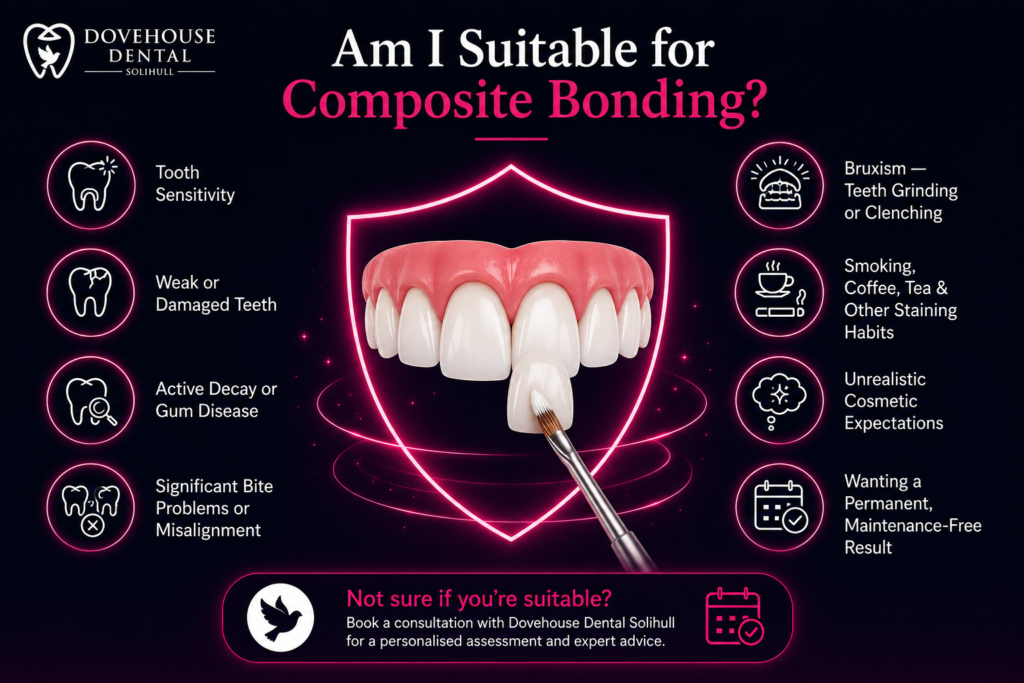
Active Decay or Gum Disease
This is the most common reason we’d ask a patient to pause. If any of the following apply, bonding needs to wait:
- Untreated cavities or tooth decay
- Gum disease — gingivitis or periodontitis
- Noticeable enamel erosion
- Heavy plaque or tartar build-up
Placing resin over or near these issues risks decay progressing unnoticed underneath, and bonding simply won’t hold as well against inflamed or receding gums.
What we’d recommend: a full dental examination and, where needed, a course of hygiene treatment first. Once decay is treated and your gums are healthy, bonding becomes a far safer, more predictable option.
Significant Bite Problems or Misalignment
Composite bonding is a cosmetic treatment, not an orthodontic one. If your teeth are severely crowded, protruding, or your bite doesn’t meet correctly, bonded surfaces can end up taking on forces they were never designed to bear — and chip, crack or come loose far sooner than expected.
Better suited alternative: straightening treatment such as Invisalign first, to get your bite into a stable position, followed by composite bonding once everything’s settled. It’s a combination we see work well time and again.
Bruxism — Teeth Grinding or Clenching
Bruxism is one of the most underdiagnosed reasons bonding fails early. Grinding, especially overnight, generates forces that composite resin simply isn’t built to withstand indefinitely — leading to chips, cracks, and accelerated wear across the bonded surface.
What to sort first: speak to our team about a custom-fitted mouthguard. Protecting your teeth — and any bonding you go on to have — from grinding forces makes a real difference to how long the result lasts.
Smoking, Coffee, Tea & Other Staining Habits
Composite resin is more porous than porcelain, so it’s more prone to staining from everyday habits — tobacco, coffee, tea, red wine, dark soft drinks, and strongly pigmented foods. That doesn’t automatically rule bonding out, but it’s worth an honest conversation before you go ahead.
As our own composite bonding FAQs note, bonding is stain-resistant but not stain-proof, and — unlike natural teeth — it can’t be whitened later, only polished or replaced. If heavy staining habits are unlikely to change, porcelain veneers may hold their appearance for longer.
Unrealistic Cosmetic Expectations
Bonding is remarkable for what it is, but it has limits. It’s not the right fit if you’re hoping for a dramatic shade change from heavily discoloured teeth, major structural reshaping, or a full “smile makeover” from a single treatment alone.
What actually works well: a phased plan — often teeth whitening first, followed by bonding matched to your new, brighter shade, with Invisalign added in if alignment needs attention too. Talking this through openly at a consultation avoids disappointment later.
Wanting a Permanent, Maintenance-Free Result
With good oral hygiene and regular check-ups, composite bonding typically lasts 3 to 7 years — but it isn’t a “fit and forget” treatment. It can chip or pick up staining over time and will eventually need touch-ups or replacement.
For many patients that trade-off is well worth it, given the lower cost and non-invasive nature of the treatment. Others, especially after having veneers or crowns explained to them, decide they’d rather invest more upfront for something longer-lasting. Neither is the “wrong” choice — it’s about going in with clear expectations.
What If Composite Bonding Isn't Right for You Yet?
Invisalign
For crowding or bite issues — creates a stable foundation before any cosmetic work begins.
Teeth Whitening
Often makes a significant difference on its own, especially where staining is the main concern.
Dental Veneers
A more durable, stain-resistant option for patients who want a longer-lasting cosmetic result.
Restorations & White Fillings
For teeth that need structural strength first, before anything cosmetic is considered.
The Bottom Line: It's About Suitability, Not Rejection
If we tell you bonding isn’t the right move just yet, it isn’t a closed door — it’s honesty, and it’s there to protect you from wasted money, avoidable disappointment, or damage to your oral health down the line.
At Dovehouse Dental Solihull, we’ve been part of the community since 1936, and our approach has always been to look at your whole picture — your current oral health, your habits, and your goals — before recommending any treatment plan. If you’re wondering whether composite bonding is right for you, the best next step is a proper consultation with our team.
Frequently Asked Questions
The only reliable way is a consultation with one of our dentists, who’ll assess your oral health, bite, and habits before recommending bonding or an alternative. Book a consultation with Dovehouse Dental Solihull to get a clear, honest answer.
Yes, but staining is more likely and progresses faster than on natural enamel. We’ll talk through realistic maintenance expectations at your consultation, and may suggest veneers as a more stain-resistant alternative.
Ready to find out if composite bonding is right for you?
Book a consultation with Dovehouse Dental Solihull. We’ll assess your oral health, discuss your goals, and recommend a plan built around what will actually last.